Monarchs in My Garden
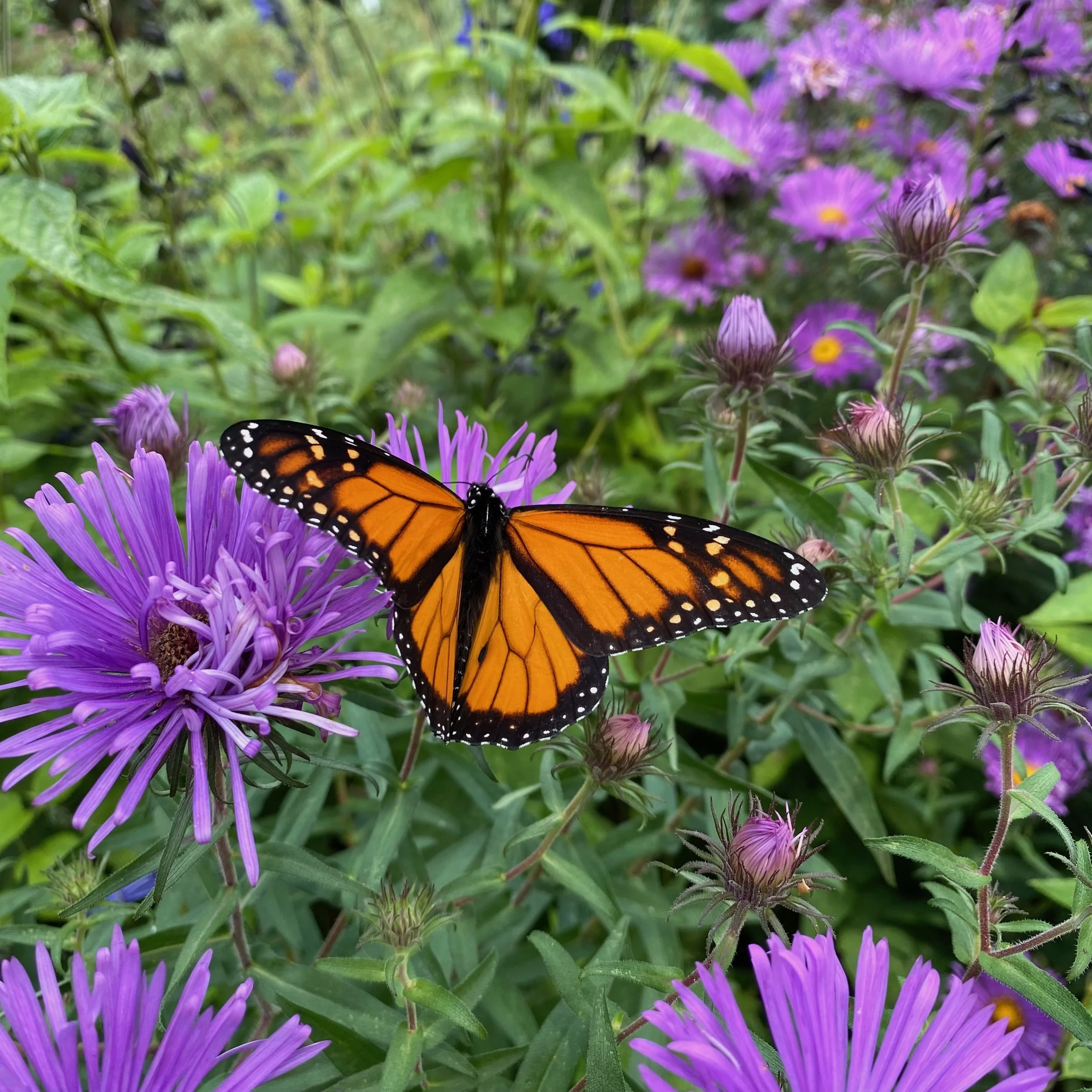
My garden is aflutter with monarch butterflies. Almost every time I look out a window during the day I see butterflies.
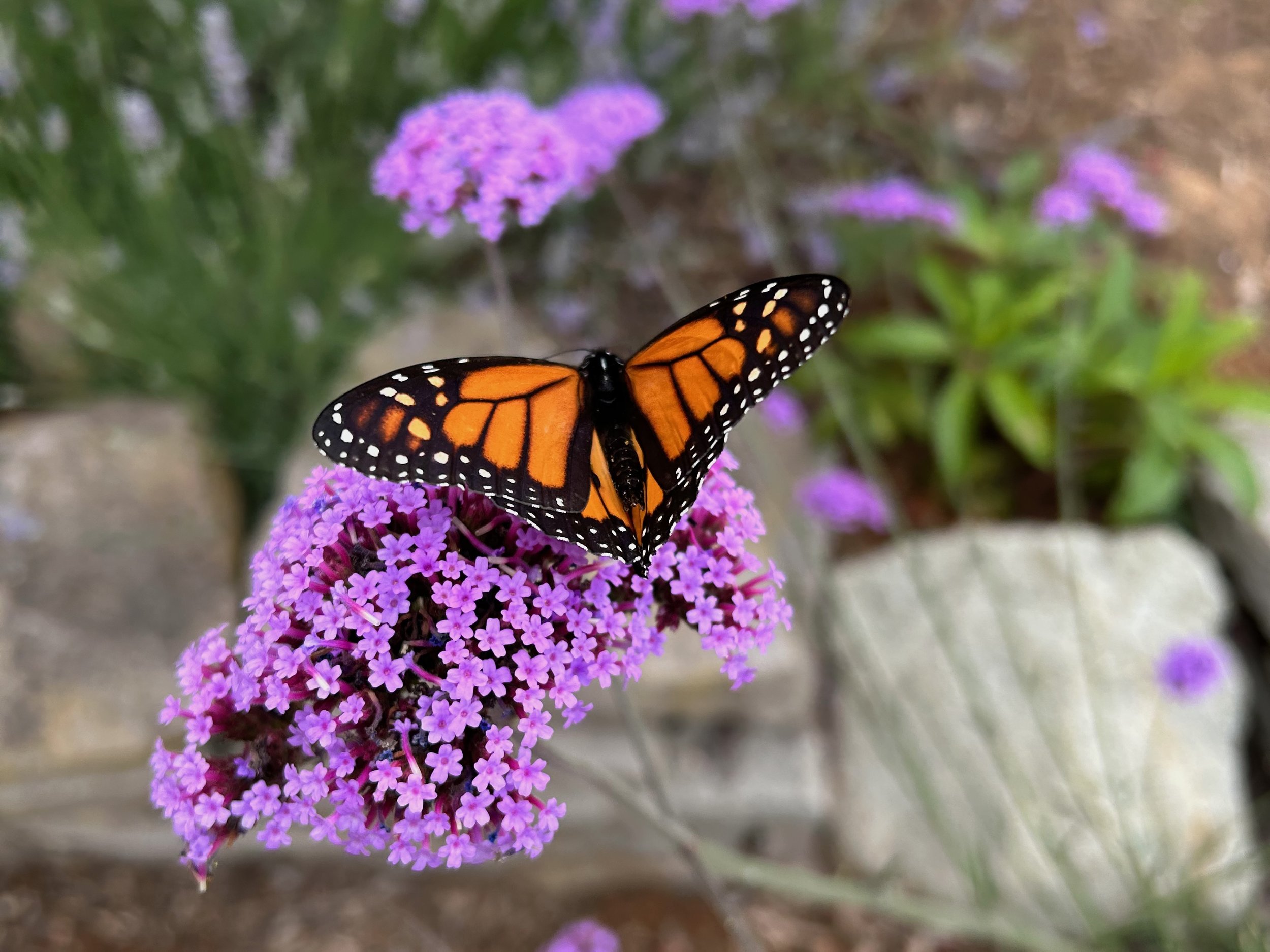
The monarchs prefer the Verbena bonariensis that freely self-sows around my garden spring through fall. I delight to see walkers and children pause to watch the butterflies. I also have swallowtails, sulfurs and an occasional mourning cloak.
“A recent U.S. government analysis found that the probability of the iconic (monarch) species going extinct by 2080 is 95%. In December, the U.S. Fish and Wildlife Service recommended listing monarch butterflies as Threatened under the U.S. Endangered Species Act. This would create additional protection for the western monarch butterflies and their habitat and encourage conservation efforts that will help save this beloved species from extinction.” (From California State Parks Foundation publication, Spring, 2025).
Protecting monarchs is crucial. Read more about monarchs at the U.S. Fish and Wildlife Service website. Everyone can play a role in monarch conservation.
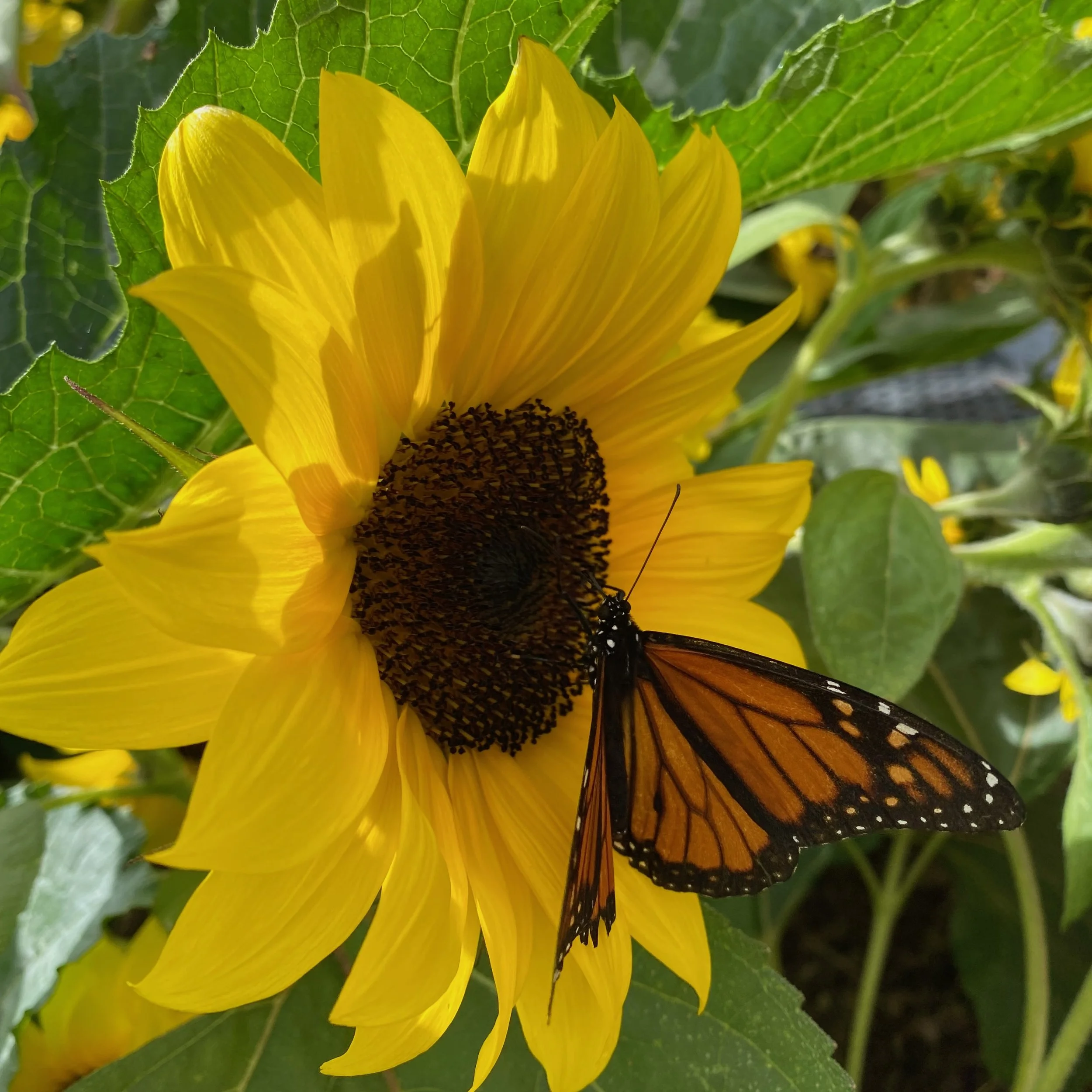
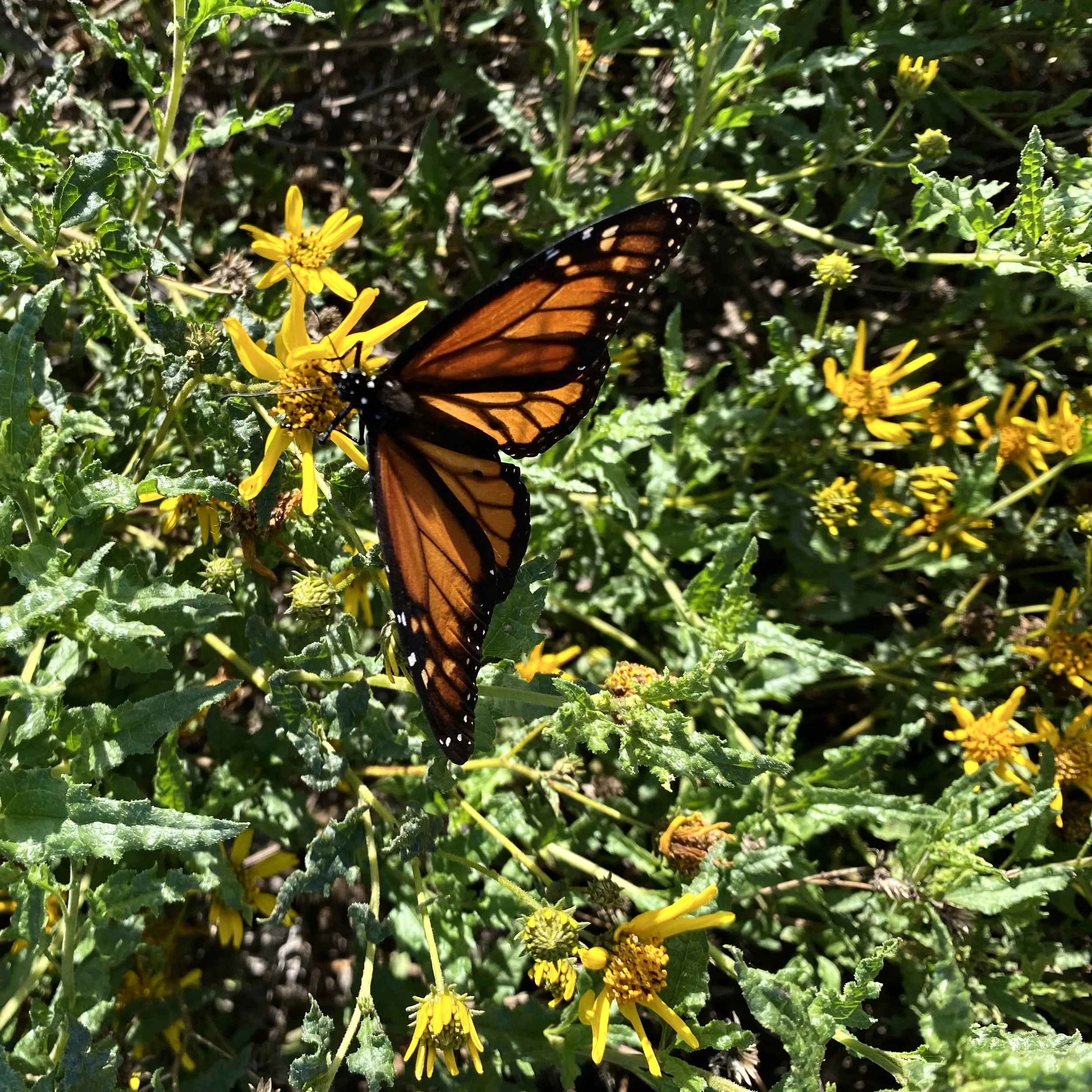
Monarchs on a garden sunflower and San Diego Sunflower, both growing in my yard.
An excellent source of reliable information is the Xerces Society. Check their Nectar Plant Guides, filtering by state or region. Download a PDF or read it here for California.
Milkweeds (Asclepias spp.) are the required host plants for caterpillars of the monarch butterfly and thus play a critical role in the monarch’s life cycle. Read more about Native Milkweeds and use their Milkweed Finder. In the San Diego area check out Native West Nursery. Local botanic or native plant gardens can also be sources. The Milkweed Finder identifies local nurseries that carry milkweed native to your area.
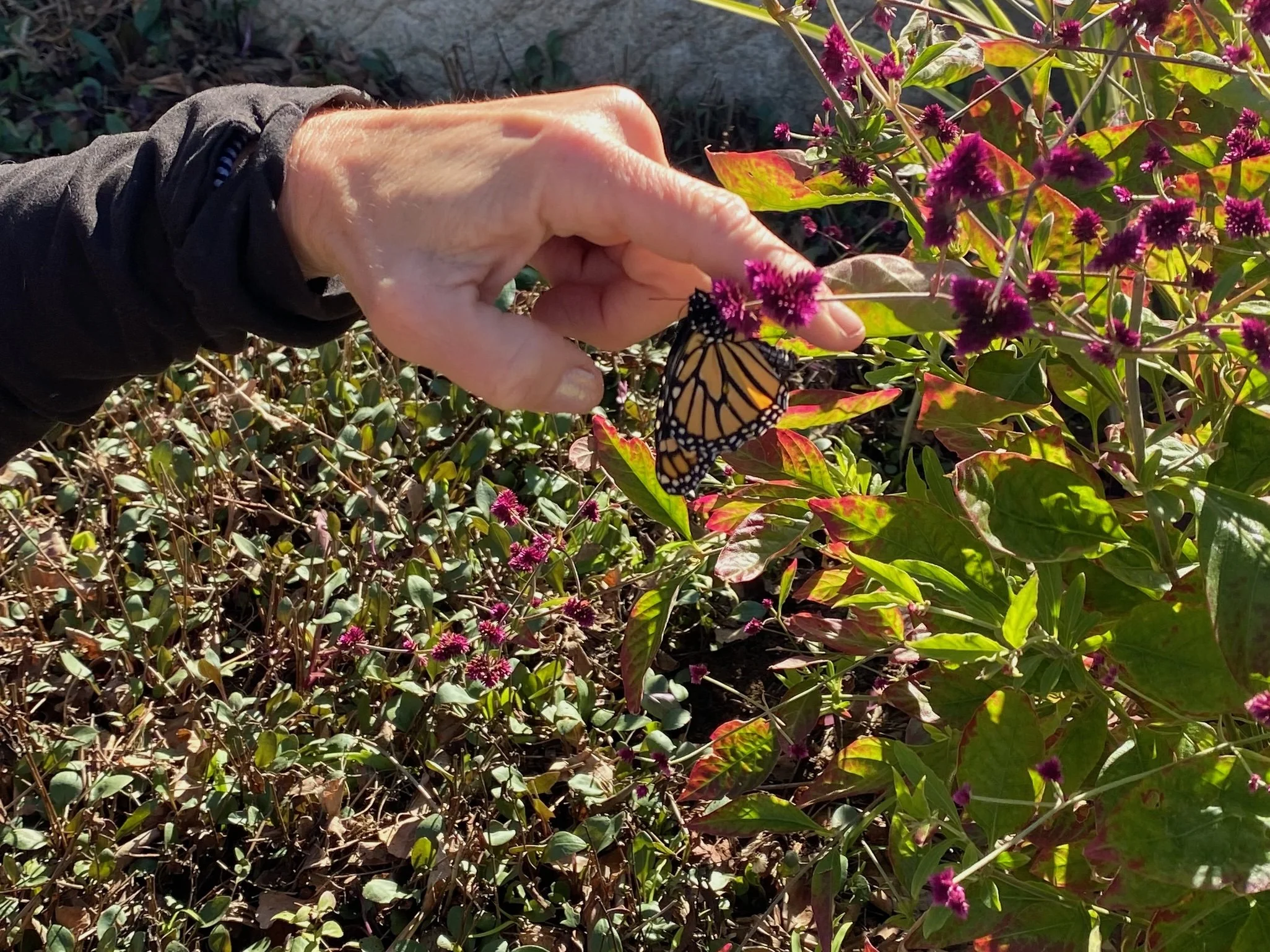
A neighbor who only has a succulent and cactus garden brings newly emerged monarchs to my garden for their first feeding.