Shake Your Tomato Plants?
Some gardeners assert that shaking your tomato plants gently every day can enhance pollination and increase tomato yields. There seems to be some evidence to support this practice. Do you shake your tomato plants?
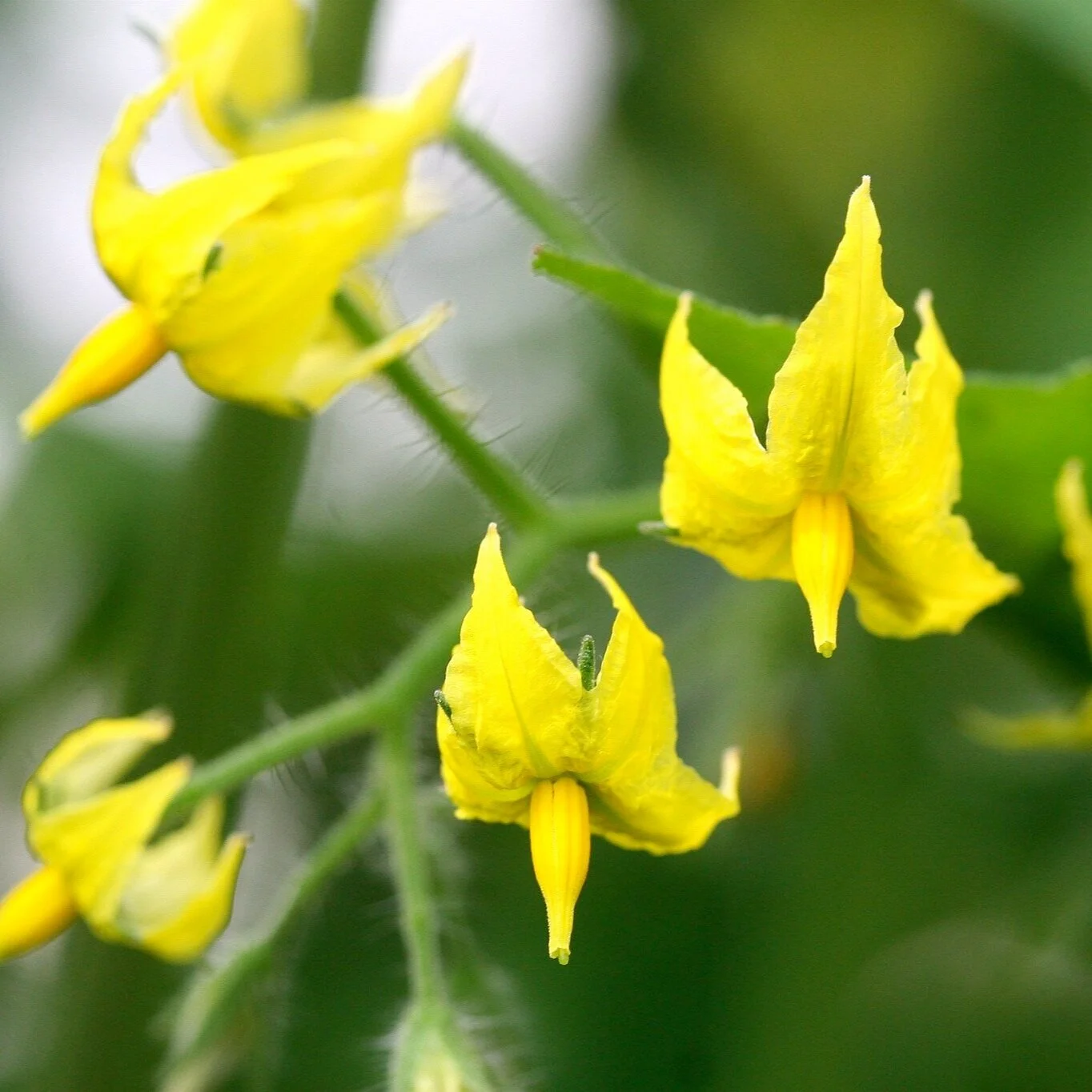
Tomatoes are self-pollinating plants. They have “perfect” flowers that have both the stamen and the stigma (male and female parts) on the same blossom. Pollen from the stamen falls onto its own stigma, pollination occurs and the fruit forms. Wind and insects also aid tomatoes in pollination.

If your plants are sheltered from light breezes or off the beaten path of bees and other pollinators, say growing high on a balcony you can aid pollination and fruiting by gently shaking the plants once a day to ensure pollination.
Buzz Pollination
Ohio State University Extension
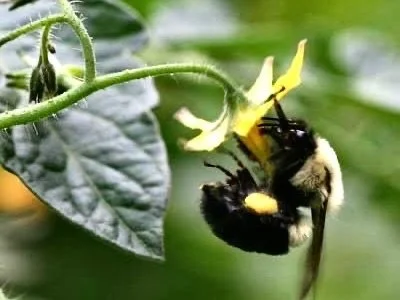
“For tomatoes, pollination by bees results in higher fruit set, yield, and weight than all other methods of pollination (Morandin et al., 2001). Several species of bees use a special strategy called “buzz pollination” to pollinate tomato flowers—an especially effective means of dislodging pollen from plant anthers via wing vibration (Figure 4) (Dingley et al., 2022). Bumble bees engage in this pollination behavior, which requires them to grasp the anthers of a flower and vibrate rigorously to dislodge the pollen (Figures 4a and 4b). Buzz pollination occurs when the bee vibrates its thoracic muscles at a very high frequency (Cooley & Vallejo-Marín, 2021). This causes the pollen to bounce off the anther of the flower and land on the fur of the bumble bee. When the bee travels to new flowers, this pollen is transferred between flowers, completing pollination. Because tomatoes do not produce nectar, their only floral reward to draw in pollinators is pollen. This greatly influences the type of bee best suited for use in tomato greenhouses. Honey bees do not perform buzz pollination, and when given access to other floral resources they will not readily choose to pollinate tomatoes (Greenleaf & Kremen, 2006). There are, however, several groups of native bees that will use buzz pollination when visiting tomato flowers. For example, the Urbane digger bee (Anthophora urbana Cresson) (Figure 4b) was found to consistently visit tomato flowers in Northern California (Greenleaf & Kremen, 2006).”